By using our website, you agree to the use of cookies as described in our Cookie Policy
What Causes Cracks in Wellington Backyard Pools?
Most pool owners think cracks are just cosmetic. Surface-level stuff you can slap some patching compound on and forget about. But the reality underneath? Those fissures are telling you something about what's happening beneath the deck, inside the shell, or deep in the soil. Ignore them long enough, and you're not just facing repair bills—you're looking at structural failure, water loss, and expensive excavation work that could've been avoided.
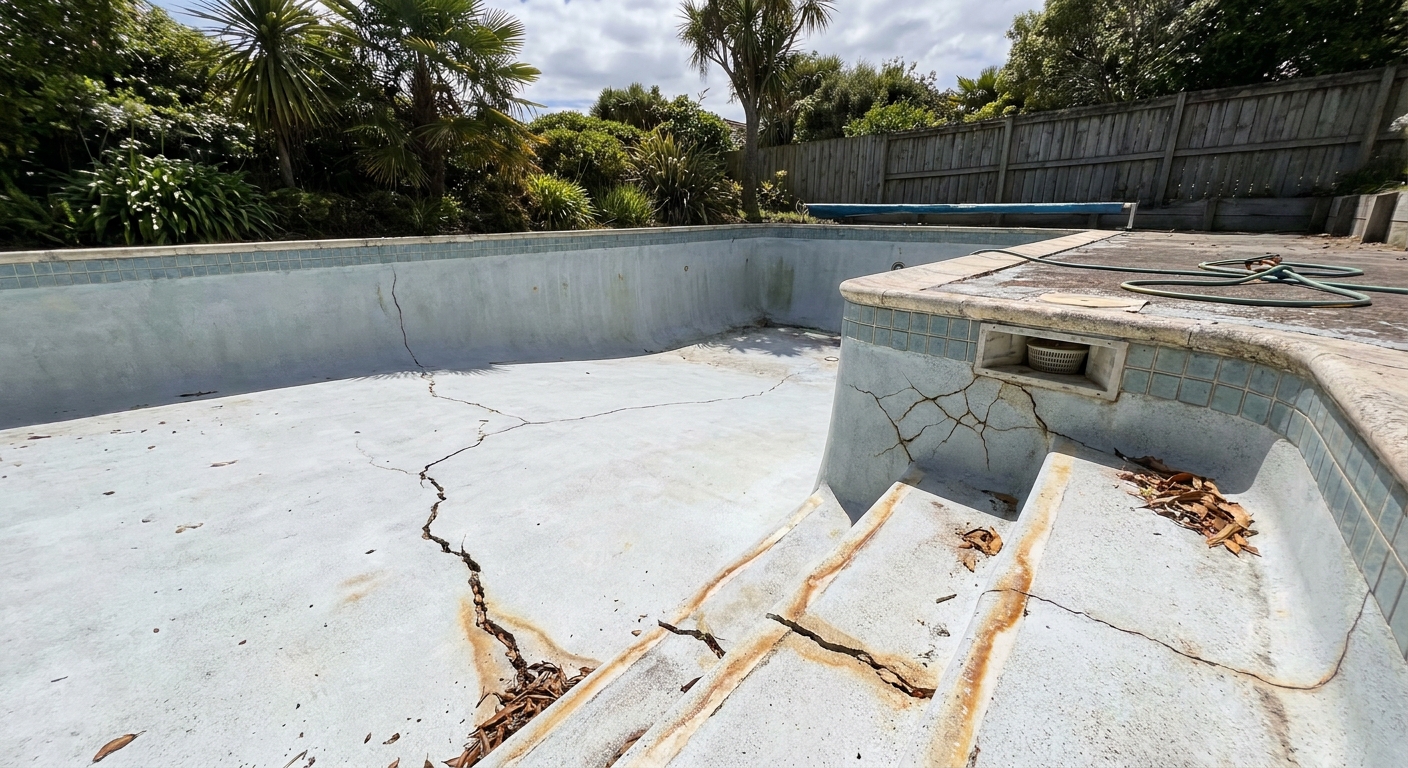
Here's what matters. If your pool has cracks, they didn't show up for no reason. Every split in the concrete or plaster is tied to pressure, movement, chemistry, or time. And if you want to protect the investment sitting in your backyard, you need to know what's causing the damage—not just what it looks like on the surface.
Ground Instability Puts Pressure on Everything
Wellington sits on soil that doesn't always play nice. Clay-heavy ground swells when it's wet and shrinks when it dries. That cycle creates movement beneath your pool, and concrete doesn't bend—it breaks. When the earth shifts, even slightly, the shell gets stressed. And over time, that stress shows up as cracks along the floor, walls, or steps.
Seismic activity doesn't help either. Even minor tremors can shift the ground just enough to compromise a pool's structural integrity. If your backyard sits on unstable or poorly compacted soil, the risk goes up. This is why site preparation matters before the first shovel hits dirt.
Shoddy Work Shows Up Later
Not all Wellington pool contractors are created equal. Cutting corners during construction—whether it's weak rebar placement, insufficient concrete thickness, or rushed curing—sets you up for problems down the line. A pool shell that wasn't reinforced properly can't handle normal ground pressure, let alone shifts or settling.
Concrete that cures too fast or unevenly develops shrinkage cracks. If the mix wasn't right or the weather wasn't accounted for, you'll see spiderweb patterns within the first year. And once those surface cracks form, water seeps in, freeze-thaw cycles kick in, and the damage compounds. This is why vetting your contractor isn't optional.
Water Pressure from Below Pushes Back
Hydrostatic pressure is one of the most misunderstood forces working against your pool. When groundwater levels rise—whether from heavy rain, irrigation runoff, or a high water table—that water pushes against the outside of your pool shell. If the pool is empty or low, there's nothing pushing back from the inside.
The result? Upward or inward pressure that can crack floors, buckle walls, or even lift the entire structure. This is especially common in Wellington during wet seasons. Draining your pool without accounting for groundwater is one of the fastest ways to invite catastrophic damage.
Temperature Swings Cause Expansion and Contraction
Concrete expands when it heats up and contracts when it cools. Over years of seasonal temperature changes, that constant movement stresses the material. Without proper expansion joints or flexible sealants, the shell has nowhere to go but crack.
Even in mild climates, repeated thermal cycling weakens the bonds in concrete and plaster. The damage accumulates slowly, which is why some cracks don't appear until years after installation. If your pool wasn't designed with thermal expansion in mind, you're playing a losing game.
Time Breaks Down Every Material
Nothing lasts forever. Over the years, water, chemicals, UV exposure, and sheer use degrade the materials holding your pool together. Concrete loses compressive strength. Plaster thins out. Sealants dry up and crack. What was once a solid, watertight structure becomes porous and brittle.
Age-related cracks are inevitable if maintenance has been lax. The longer you go without resurfacing, resealing, or reinforcing weak spots, the more vulnerabilities stack up. And once water gets into those micro-cracks, freeze-thaw damage and chemical erosion accelerate the decline.
Tree Roots Don't Care About Your Pool
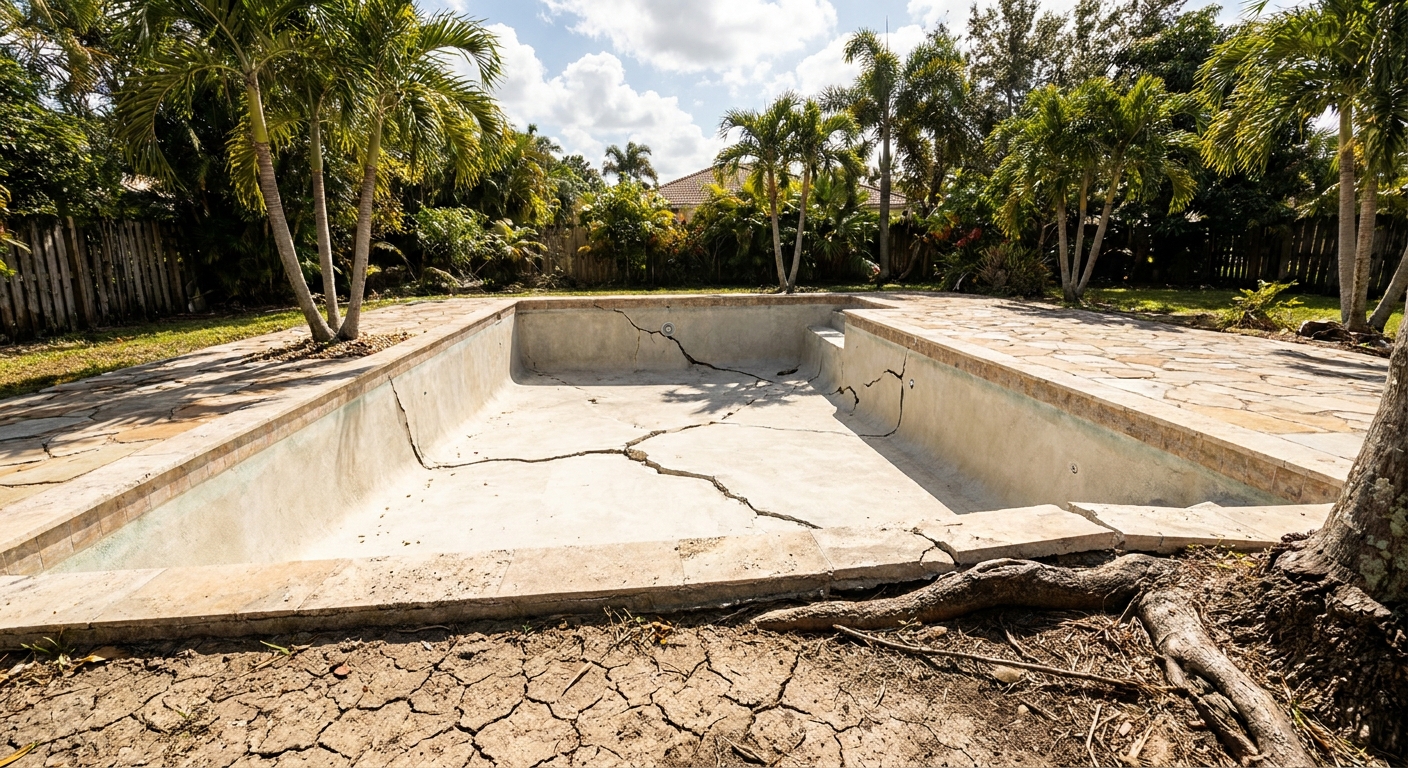
Roots follow water. If your pool is surrounded by mature trees or large shrubs, their root systems are likely creeping closer to—or already beneath—your pool shell. As roots expand, they push against concrete with surprising force. That pressure can crack walls, lift floors, or damage plumbing lines.
It's not just about proximity either. Some species have aggressive root systems that can travel dozens of feet in search of moisture. If you didn't plan for root barriers during installation, or if landscaping has grown unchecked, you're at risk. Regular inspections and strategic tree placement are your best defense.
Chemical Imbalances Eat Away at Structure
Low pH, high chlorine, or imbalanced alkalinity doesn't just irritate swimmers—it corrodes your pool's interior surfaces. Acidic water eats into plaster, grout, and even concrete over time. That erosion weakens the shell and makes it more prone to cracking under stress.
Neglecting water chemistry is one of the most common mistakes pool owners make. Testing strips are cheap. Balancing chemicals takes minutes. But the damage from months of imbalanced water can cost thousands in resurfacing and structural repairs.
What You Should Be Watching For
Spotting cracks early gives you a shot at fixing them before they spiral. Not all cracks mean disaster, but all of them mean something. Here's what to monitor:
- Hairline cracks in plaster that don't seem to widen—often cosmetic but worth tracking
- Structural>
- Structural cracks running vertically or horizontally across walls or floors
- Cracks that leak water or show discoloration around the edges
- Cracks near corners, steps, or anywhere the shell changes shape
- Bulging or uneven areas that suggest movement beneath the surface
Prevention Beats Repair Every Time
You can't control the soil or the weather, but you can control how your pool is built and maintained. Proper site prep, quality materials, and skilled contractors set the foundation. Regular pool maintenance, balanced water chemistry, and proactive repairs keep problems from compounding.
Here's what matters most:
- Work with licensed, experienced pool builders who understand Wellington's soil and climate
- Ensure proper reinforcement and expansion joints during construction
- Never drain your pool without consulting a professional, especially during wet seasons
- Test water chemistry weekly and adjust as needed
- Trim back invasive vegetation and monitor root growth near the pool
When to Call in a Professional
If you're seeing cracks, don't wait to see if they get worse. Structural damage doesn't heal itself. A pool service professional can assess whether the crack is superficial or symptomatic of a bigger issue—like ground movement, hydrostatic pressure, or failing infrastructure.
They'll also help you understand whether you're looking at a simple patch job or a pool resurfacing in Wellington. And if the damage is tied to construction defects or poor soil conditions, they can recommend solutions that address the root cause, not just the visible symptoms.
Small Cracks Turn Into Big Problems
Cracks in Wellington backyard pools don't happen by accident. They're the result of ground shifts, poor workmanship, water pressure, temperature stress, aging materials, invasive roots, or chemical neglect. Some causes are out of your hands. Others are entirely preventable with smart planning and consistent upkeep.
The difference between a minor repair and a major reconstruction comes down to how fast you act and how seriously you take maintenance. Treat your pool like the engineered structure it is—not just a hole in the ground filled with water. Because once the shell fails, everything else follows.
Let’s Protect Your Pool Investment Together
We know how much your backyard pool means to your family and your home’s value. If you’re noticing cracks or just want peace of mind, let’s get ahead of the problem before it grows. Give us a call at 561-792-5326 or request a free estimate and we’ll help you keep your pool safe, beautiful, and ready for every season.
‹ Back
Recent Posts
-
What Causes Cracks in Wellington Backyard Pools?
November 11, 2026
-
Can You Remodel Your Wellington Pool Without Starting Over?
October 28, 2026
-
Is Your Spa in Wellington Heating the Way It Should?
August 31, 2026
-
Are Water Features in Wellington Right for Your Pool Design?
August 17, 2026
-